iWork —
from study design
to data collection.
A platform for designing and conducting wellbeing studies: protocols, multilingual questionnaires and structured results. The researcher and her team manage content and questions independently.
What is
iWork.
A research console for managing protocols, questionnaires, content and wellbeing study results. The team works with role-based permissions and can connect the platform to other systems.
Where we
started.
A researcher designs wellbeing programs, but distributes them via PDF and email. Quizzes kept in spreadsheets, translations redone by hand for every country, responses collected however they come in. A solid protocol, a process that doesn't scale.
The challenge
Turn a wellbeing research protocol into a multilingual platform. The researcher, company manager and employee have distinct permissions and views. Programmes, questionnaires and responses must remain organised and accessible over time.
Our approach
A shared data model for programmes, questionnaires and content. The researcher manages translations in the console; each user accesses the information permitted by their role. Weekly demos and retained records of removed data.
The result
Wellbeing programs distributed across multiple countries without going back through manual translation. A research protocol digitized from collection to reporting. The researcher is self-sufficient managing content — no more tickets to change a single question.
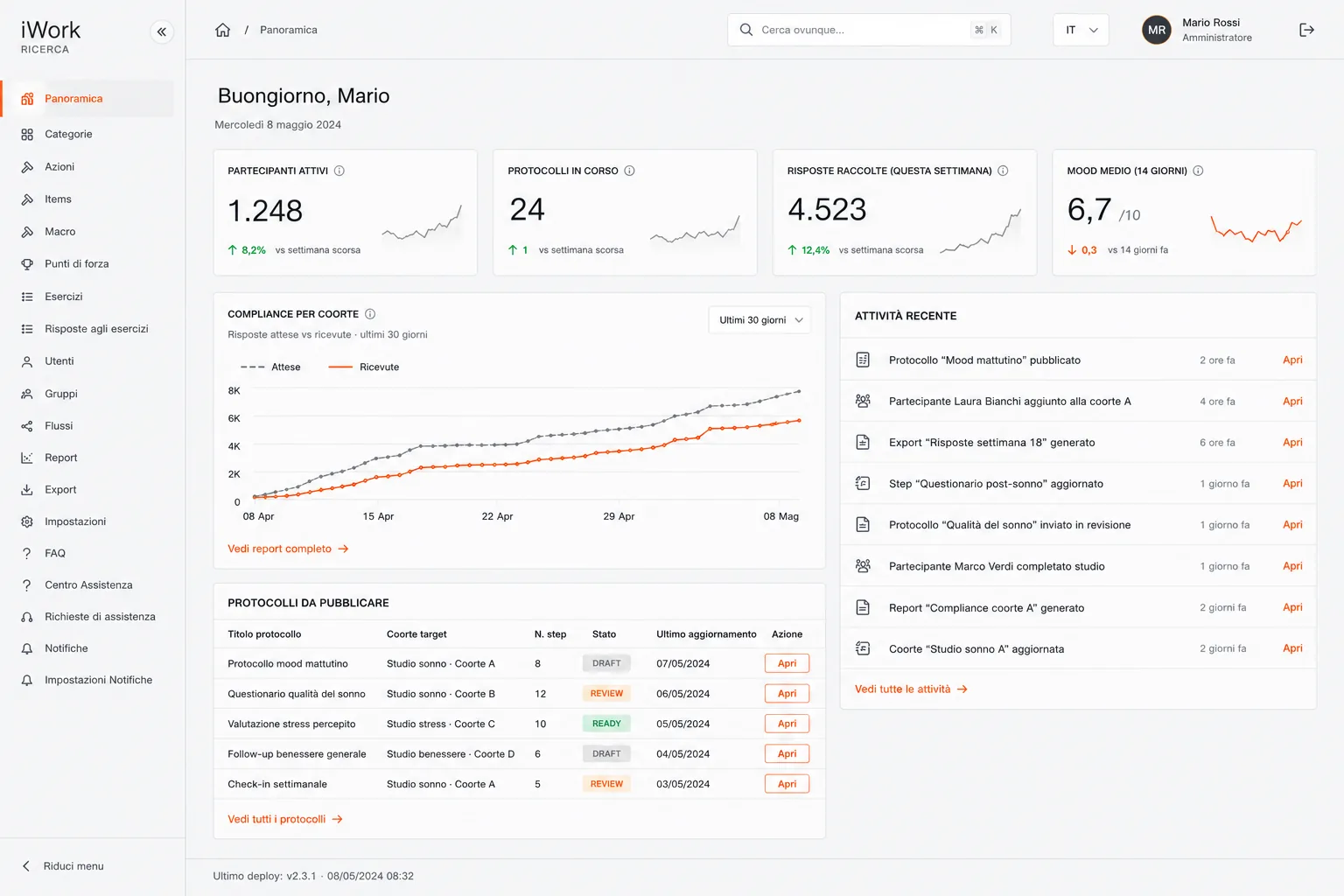
The researcher's overview.
Study status, group participation, recent activity and protocols awaiting publication: an overview to see where action is needed.
Key
features.
Four areas for organising studies, collecting responses and monitoring participation. Multilingual content and distinct permissions for team members.
Quizzes &
answers
Question editor, multilingual answers, scoring and categories. Versioning and controlled publishing.
Study
protocols
Programmes organised into stages, with activities and conditions for moving to the next stage. Links between questionnaires, categories and wellbeing observations.
Reports
& export
Dashboards for the researcher and CSV or Excel exports, with filters by group, period and category.
Notifications
& mood
Configurable notifications and reminders, FAQs and support requests. Mood observations to follow participation in studies.
Three roles,
distinct permissions.
Each role accesses the information and actions assigned to it. Operators can view lists without editing or deleting data.
Admin
- Full CRUD across every domain
- User, role and group management
- Global settings configuration
- Export, reports, support requests
- Publishing quizzes and flows
User
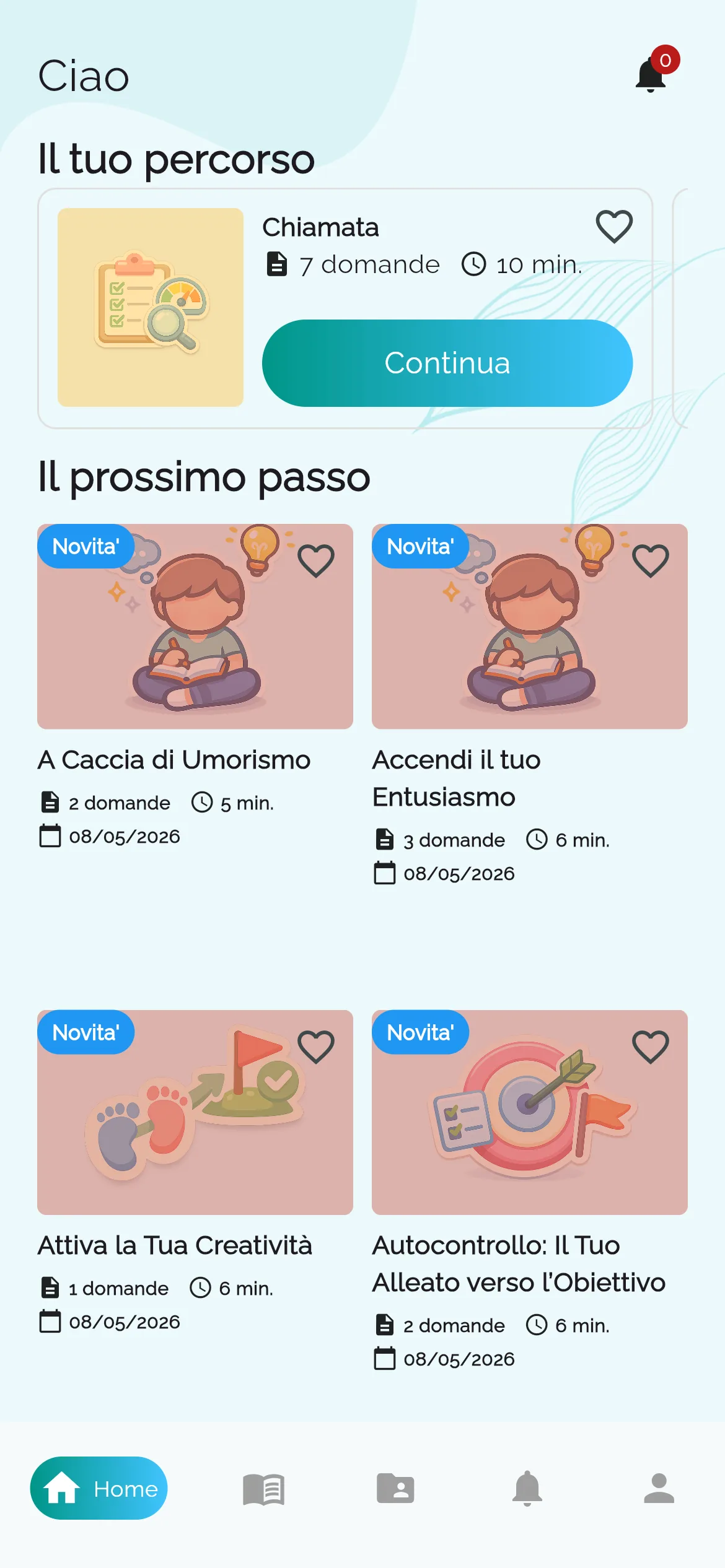
- Completes assigned quizzes and protocols
- Daily mood tracking
- Views personal strengths
- Opens support requests, reads FAQ
- Receives notifications and reminders
Operator
- Read-only lists
- Views aggregated reports
- Reviews notifications and mood
- No writes, ever
- Audit-friendly for compliance
Domains
managed.
Twelve Prisma aggregates with soft-delete (deletedAt) everywhere, multilingual fields stored as JSON (name, description, title) and user scoping on every REST endpoint.
Technical
features.
Architectural choices built to last: a single source of truth for types, lazy loading on admin routes, per-environment configuration, native multilingual support from day one.
Project
status.
Incremental shipping, no big-bang releases. v1.0.0 is in production; v1.1.0 extends the data model and introduces the aggregated reports the researcher asked for.
Foundation release
- Full admin console: quizzes, protocols, participants
- REST API /api with JWT & roles
- Multilingual, soft-delete, context-aware scoping
- Jest + Playwright test suite in CI
Reporting & integrations
- Aggregated reports by group & period
- Multi-sheet Excel export with saved filters
- Webhooks for notifications to external systems
- Mood tracking extended with historical trends
Tech
stack.
Nx monorepo, NestJS on the backend, standalone Angular 20 with signals and OnPush on the frontend. Tests written the way code is written: Jest for the API, Playwright for the console.
A console the researcher and her team use every day — without ever asking for support.
Have a wellbeing platform that needs to grow?
Tell us about your studies and how you currently manage protocols, questionnaires and responses. We reply within 48 hours with an initial technical assessment.
Images are for illustrative purposes and do not necessarily reflect the current state of the application.